Product Knowledge

Why Is Hot-Rolled Steel Coil a Reliable Choice for Industrial Applications?

2026-11-04 0 Leave me a message

Choosing the right steel material is essential for manufacturers that need dependable performance, efficient fabrication, and predictable production costs. Hot-rolled steel coil is widely used across construction, automotive manufacturing, machinery production, infrastructure, and general metal fabrication because of its practical mechanical properties and versatile processing characteristics.

However, not every steel coil offers the same value. Differences in chemical composition, thickness consistency, surface condition, mechanical performance, and manufacturing control can directly affect the quality of finished products. Understanding these factors helps purchasing teams make better sourcing decisions and avoid unnecessary production problems.


Article Outline

  • Understanding the production process and fundamental characteristics of hot-rolled steel coil.
  • Evaluating mechanical properties, dimensions, and material performance.
  • Identifying suitable applications and comparing hot-rolled and cold-rolled products.
  • Reducing procurement risks through quality inspection and specification control.
  • Improving supply chain efficiency through proper storage and supplier evaluation.

1. Why Hot-Rolled Steel Coil Matters in Modern Manufacturing

Steel remains one of the most important engineering materials in the global manufacturing industry. From structural frameworks and industrial equipment to automotive components and agricultural machinery, manufacturers depend on steel products that combine mechanical reliability with reasonable production costs.

Hot-rolled steel coil plays an important role in meeting these requirements. Its manufacturing process supports efficient large-scale production, making it a practical material for applications where precise surface finishes are less critical than structural performance, workability, and cost efficiency.

For purchasing managers, material selection involves more than comparing prices per ton. An unsuitable grade or inconsistent thickness can result in excessive machining, welding difficulties, rejected components, and production delays.

Understanding hot-rolled steel coil helps buyers evaluate whether a material meets their actual operating conditions instead of selecting products based on price alone.

Key purchasing insight: The most cost-effective steel coil is not necessarily the cheapest one. It is the material that meets application requirements consistently while minimizing processing waste and quality risks.

2. What Is Hot-Rolled Steel Coil?

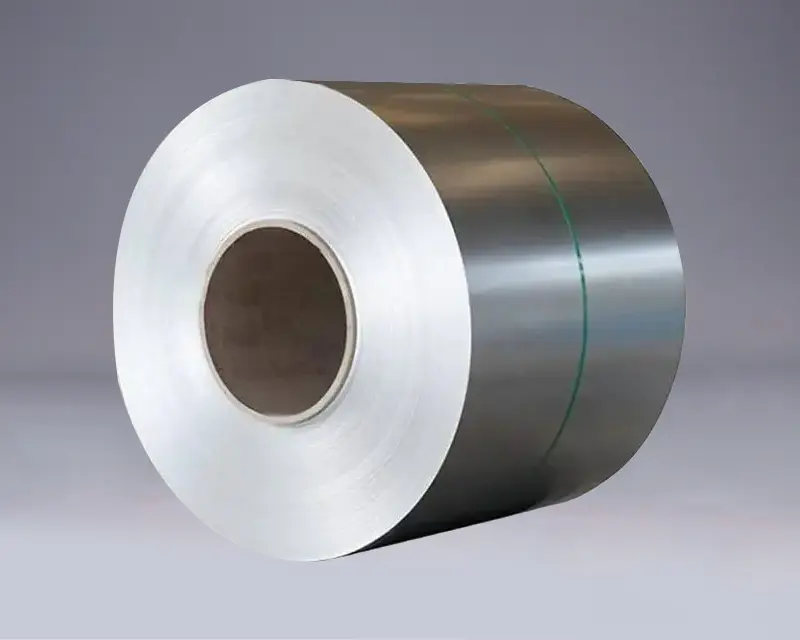
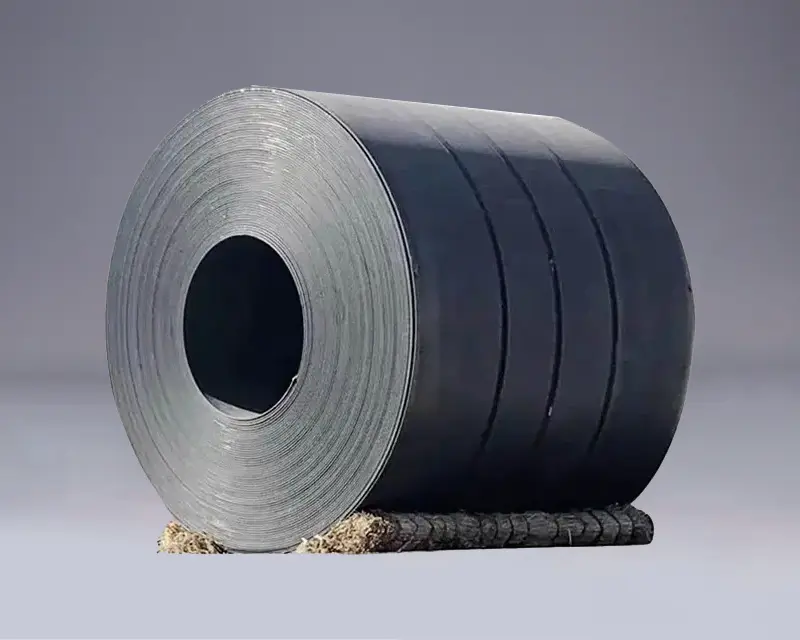
Hot-rolled steel coil is a flat steel product manufactured by heating steel slabs to temperatures above their recrystallization temperature and reducing their thickness through a series of rolling operations.

During hot rolling, the steel becomes more workable and can be shaped into long, continuous strips. These strips are subsequently cooled and wound into coils for convenient storage, transportation, and further processing.

Understanding Its Basic Structure

Hot-rolled steel coil is generally supplied in rolled strip form, with its width, thickness, weight, and steel grade determined by production requirements and applicable standards.

Its surface may contain mill scale, which forms during high-temperature processing. Depending on the intended application, customers can select standard hot-rolled products or pickled and oiled materials with improved surface cleanliness.

Common Product Characteristics

  • High production efficiency: Continuous rolling operations support large-volume manufacturing.
  • Good workability: The material is suitable for many cutting, bending, forming, and welding operations.
  • Versatile dimensions: Different thicknesses and widths can be produced according to available manufacturing capabilities.
  • Broad material selection: Available grades cover different strength and application requirements.
  • Practical cost structure: Hot rolling is generally economical for many standard industrial steel products.

These characteristics make hot-rolled steel coil an important intermediate material for manufacturers that process steel into finished components.


3. How Is Hot-Rolled Steel Coil Manufactured?

The manufacturing process has a direct influence on the final steel coil's dimensional accuracy, mechanical properties, surface quality, and consistency. Understanding the main production stages helps buyers identify important quality control points.

Step 1: Steelmaking and Slab Preparation

Steel is produced through an appropriate steelmaking route, followed by casting into semi-finished slabs. Chemical composition is controlled according to the intended steel grade and its required performance.

Before rolling, slabs are inspected and prepared to ensure that major surface or internal defects do not compromise subsequent production.

Step 2: Reheating

The steel slab is heated in a reheating furnace to a suitable rolling temperature. Uniform heating is important because temperature variations can affect deformation resistance, thickness control, and final material properties.

Step 3: Rough Rolling

The heated slab passes through roughing mills, where its thickness is substantially reduced. This stage transforms the thick slab into an intermediate steel strip suitable for finishing operations.

Step 4: Finish Rolling

The intermediate strip enters finishing stands for further thickness reduction and dimensional control. Rolling speed, temperature, roll conditions, and process parameters all influence the final product.

Step 5: Cooling and Coiling

After finishing, the steel strip passes through a controlled cooling process before being wound into coils. Cooling conditions influence the resulting microstructure and mechanical properties.

Step 6: Inspection and Packaging

Finished coils are checked against production requirements. Inspection may include thickness measurement, width verification, surface examination, mechanical testing, and identification checks.

Appropriate packaging and labeling help protect the material during storage and transportation.

Quality control matters: Consistent temperature management, rolling control, cooling practices, and inspection procedures are essential for producing dependable hot-rolled steel coil.

4. Key Properties That Determine Material Performance

When selecting hot-rolled steel coil, buyers should evaluate its mechanical and dimensional characteristics in relation to the finished product's requirements.

4.1 Yield Strength

Yield strength indicates the stress at which steel begins to deform permanently. It is particularly important for structural components and applications that must maintain their shape under load.

Choosing an appropriate yield strength helps balance structural requirements, fabrication characteristics, and material costs.

4.2 Tensile Strength

Tensile strength represents the maximum tensile stress a material can withstand before failure. It provides useful information about the material's resistance to pulling forces.

Buyers should check whether the selected grade satisfies the applicable engineering specifications.

4.3 Elongation

Elongation measures the material's ability to stretch before fracture. Adequate elongation is important for forming operations, bending processes, and applications involving deformation.

4.4 Thickness and Width Tolerance

Dimensional consistency directly affects downstream production. Thickness variations may cause problems during laser cutting, stamping, machining, or automated fabrication.

Purchasers should confirm acceptable tolerances before ordering rather than assuming all coils have identical dimensional accuracy.

4.5 Surface Condition

Surface quality affects coating, painting, welding preparation, and final appearance. Standard hot-rolled coils commonly retain mill scale, while pickled and oiled coils undergo additional surface treatment to remove scale and provide temporary corrosion protection.

Important Performance Factors

Property What It Measures Why Buyers Should Care
Yield Strength Resistance to permanent deformation Helps meet structural load requirements
Tensile Strength Maximum tensile stress before failure Supports material suitability assessment
Elongation Deformation capacity before fracture Important for forming and bending
Thickness Tolerance Consistency of material thickness Reduces downstream processing variation
Surface Quality Condition of the steel surface Influences coating and fabrication preparation
Chemical Composition Content of alloying and other elements Determines grade compliance and performance

5. Why Choose Hot-Rolled Steel Coil for Industrial Applications?

Hot-rolled steel coil offers several practical advantages for industrial buyers. Its suitability depends on the required mechanical properties, surface condition, fabrication process, and total production cost.

5.1 Efficient Large-Scale Production

Hot rolling is suitable for producing substantial quantities of steel strip. This makes it attractive to manufacturers with continuous production requirements and relatively high material consumption.

For companies purchasing steel regularly, stable coil supply can simplify inventory planning and production scheduling.

5.2 Suitable for Structural Applications

Many hot-rolled steel grades are designed for structural and general engineering applications. They provide mechanical properties suitable for beams, supports, machinery frames, and fabricated metal structures.

5.3 Flexible Fabrication Options

Depending on the selected grade and thickness, hot-rolled steel can be processed through cutting, shearing, bending, welding, and other conventional fabrication methods.

This flexibility makes it useful for manufacturers producing different component types from a common raw material.

5.4 Competitive Material Economics

For applications that do not require the surface finish and tight dimensional tolerances associated with certain cold-rolled products, hot-rolled steel can provide an economical solution.

Its value becomes especially important in projects involving large material volumes, structural components, and industrial fabrication.

5.5 Multiple Downstream Processing Options

Hot-rolled steel coil can be further processed into sheets, plates, strips, blanks, and other semi-finished products. This makes it a useful starting material for various manufacturing supply chains.


6. Common Applications Across Different Industries

The versatility of hot-rolled steel coil supports its use in numerous industries. Its final application depends on the steel grade, dimensional specifications, and required processing characteristics.

6.1 Construction and Infrastructure

Construction projects require steel materials for structural components, fabricated supports, bridges, industrial buildings, and infrastructure equipment.

Suitable hot-rolled steel grades provide the strength and workability needed for many structural fabrication processes.

6.2 Automotive Manufacturing

Automotive supply chains use different steel products for structural components, chassis-related parts, reinforcement elements, and other fabricated assemblies.

The selected steel grade must satisfy the component's strength, formability, safety, and manufacturing requirements.

6.3 Machinery and Equipment

Industrial machinery manufacturers use hot-rolled steel in machine frames, equipment bases, brackets, supports, and fabricated structural components.

Material consistency is important because dimensional variations can influence assembly accuracy and machining operations.

6.4 Agricultural Equipment

Tractors, harvesting machinery, trailers, and agricultural implements contain numerous steel components exposed to demanding operating conditions.

Hot-rolled steel can be a suitable material for fabricated frames and structural parts when the selected grade meets the required mechanical specifications.

6.5 Energy and Industrial Infrastructure

Energy-related facilities, industrial plants, pipelines, storage equipment, and supporting structures use various steel products.

Application-specific standards and operating conditions should always determine the appropriate steel grade and inspection requirements.

Industry Application Overview

Industry Typical Components Main Material Considerations
Construction Structural supports, frames, fabricated sections Strength and structural compliance
Automotive Reinforcements, chassis components Formability and mechanical performance
Machinery Equipment bases, brackets, frames Dimensional consistency and machinability
Agriculture Machine frames, implement components Strength and fabrication suitability
Energy Structural equipment and industrial supports Applicable standards and service conditions

7. Hot-Rolled Steel Coil vs. Cold-Rolled Steel Coil

One common purchasing challenge is deciding between hot-rolled and cold-rolled steel. Although both products originate from steel rolling processes, they differ in manufacturing methods, surface characteristics, dimensional control, and typical applications.

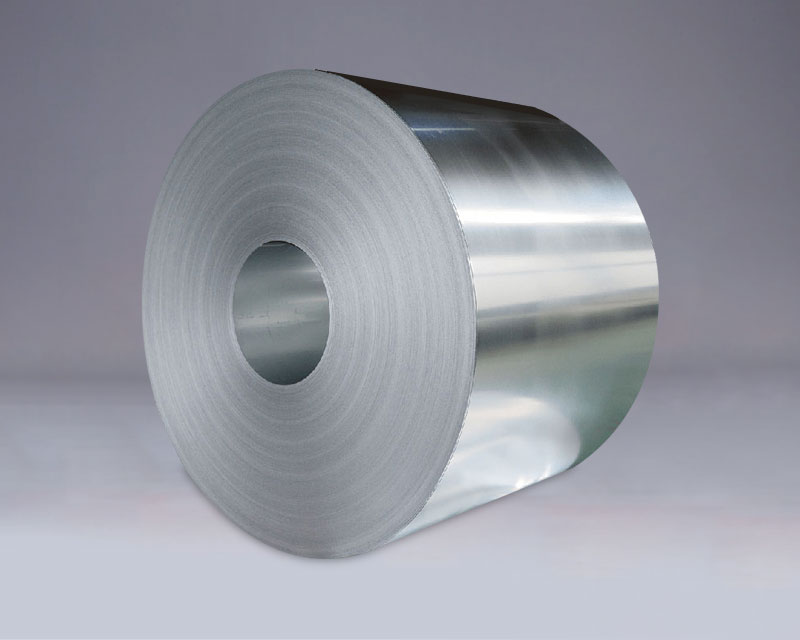
Hot-rolled steel is processed at elevated temperatures, while cold-rolled steel undergoes additional rolling at or near room temperature after the hot-rolled material has been prepared, commonly through pickling.

Comparison Factor Hot-Rolled Steel Coil Cold-Rolled Steel Coil
Processing Temperature Above recrystallization temperature At or near room temperature
Surface Appearance Typically has mill scale unless further treated Generally smoother and cleaner
Dimensional Control Generally less precise Generally tighter tolerances
Mechanical Characteristics Depends on grade and hot-rolling conditions Cold working can increase strength and hardness
Typical Applications Structural fabrication and general industrial parts Precision components and appearance-sensitive products
Relative Cost Often more economical Often higher due to additional processing

Which Material Is More Suitable?

Hot-rolled steel coil is generally worth considering when the application prioritizes structural performance, large-volume processing, and cost efficiency.

Cold-rolled steel may be more appropriate when smoother surfaces, tighter dimensional tolerances, or specific forming characteristics are essential.

Neither product is universally better. The correct decision should be based on the component's design requirements and manufacturing process.


8. How to Select the Right Steel Coil Specifications

Incorrect specifications can lead to unnecessary material costs, processing difficulties, and rejected products. Buyers should define their technical requirements before requesting quotations.

8.1 Confirm the Steel Grade

Steel grades indicate the material's specified chemical and mechanical requirements. Common hot-rolled product standards include ASTM, EN, JIS, and other national or industry specifications.

Examples include ASTM A36 for certain structural steel applications, EN 10025 grades such as S235JR and S355JR, and JIS G3101 SS400. These grades are not automatically interchangeable. Buyers should verify the relevant standard, edition, and technical requirements before substitution.

8.2 Determine Thickness and Width

Thickness and width should be based on the dimensions of the finished product and the intended cutting or forming process.

Accurate specifications help suppliers confirm production feasibility and allow buyers to compare quotations on a consistent basis.

8.3 Specify Coil Weight and Inner Diameter

Coil weight and inner diameter affect transportation, lifting equipment, storage space, and production line compatibility.

Manufacturers should confirm these details when ordering steel coils for automated processing systems.

8.4 Identify Surface Treatment Requirements

Depending on the application, buyers may require standard hot-rolled steel or pickled and oiled material.

Pickled and oiled products can be useful when mill scale removal is necessary before downstream fabrication or coating.

8.5 Confirm Mechanical and Chemical Requirements

Always refer to the applicable material standard and technical specification. Do not rely on generic descriptions such as high strength or good quality without supporting documentation.

Practical ordering tip: Prepare a specification sheet containing grade, standard, thickness, width, quantity, coil weight, inner diameter, surface condition, and required inspection documents before requesting a quotation.

9. Common Quality Problems and How to Prevent Them

Steel coil quality issues can affect processing efficiency and finished-product reliability. Early identification helps prevent avoidable production losses.

9.1 Uneven Thickness

Thickness variation may create difficulties during cutting, forming, and automated processing.

Prevention: Confirm dimensional tolerances and request appropriate inspection records. Measure the material at representative positions when receiving the coils.

9.2 Surface Defects

Surface problems may include scratches, scale-related irregularities, rust, dents, or visible rolling defects.

Prevention: Define acceptable surface conditions before ordering. Conduct visual inspections and document any significant defects upon delivery.

9.3 Edge Cracks

Edge cracking can occur due to material composition, rolling conditions, temperature variations, or other production-related factors.

Prevention: Specify suitable material grades and inspect coil edges before processing.

9.4 Coil Shape Problems

Coil telescoping, loose winding, or other shape irregularities may cause handling and feeding difficulties.

Prevention: Confirm coiling requirements, packaging methods, and acceptable shape tolerances with the supplier.

9.5 Corrosion During Storage

Moisture exposure and condensation can lead to rust, especially when steel coils are stored in unsuitable environments.

Prevention: Use appropriate protective packaging, dry storage conditions, and careful transportation arrangements.


10. What Should Buyers Check Before Purchasing?

Reliable procurement requires more than confirming product availability and price. Buyers should assess whether the material and supplier can meet their production and delivery requirements.

Essential Purchasing Checklist

  • Product specification: Confirm steel grade, standard, thickness, width, and quantity.
  • Mechanical properties: Check yield strength, tensile strength, and elongation requirements.
  • Chemical composition: Verify compliance with the applicable grade specification.
  • Surface condition: Clarify whether standard or pickled and oiled material is required.
  • Dimensional tolerance: Confirm the acceptable range for thickness, width, and length where applicable.
  • Inspection documents: Request a mill test certificate or other agreed quality documentation.
  • Packaging: Confirm moisture protection, coil securing, and labeling requirements.
  • Delivery schedule: Check production lead time, shipping arrangements, and estimated delivery dates.
  • Order consistency: Discuss how repeat orders will maintain the required specifications.

Questions to Ask a Potential Supplier

  1. Which steel grades and production standards can you supply?
  2. What thickness and width ranges are available?
  3. Can you provide material certificates and inspection records?
  4. How do you control dimensional consistency and surface quality?
  5. What packaging methods are available for international transportation?
  6. Can you support recurring orders and customized requirements?

Clear communication at the quotation stage helps reduce misunderstandings and makes supplier comparisons more meaningful.


11. Storage, Handling, and Transportation Recommendations

Even a properly manufactured hot-rolled steel coil can develop quality problems if it is stored or transported incorrectly. Appropriate handling practices help preserve product condition throughout the supply chain.

Keep Coils in a Dry Environment

Steel coils should be stored in dry, well-ventilated areas whenever possible. Avoid direct exposure to rain, standing water, and excessive humidity.

Use Suitable Lifting Equipment

Coils are heavy industrial products that require appropriate lifting equipment and trained operators. Use approved lifting accessories and follow the relevant safety procedures.

Prevent Mechanical Damage

Careless handling can cause dents, edge damage, and deformation. Coils should be secured properly during loading, unloading, and transportation.

Follow Inventory Management Procedures

Clear labeling and inventory records help identify material grades, production batches, and receiving dates. A first-in, first-out approach can help manage stock rotation when appropriate.

Check Packaging Before Shipment

Export shipments should use packaging suitable for the transportation route and expected environmental conditions. Buyers should discuss protective wrapping, strapping, edge protection, and shipping arrangements in advance.


12. Why Work with a Reliable Steel Supplier?

Choosing a dependable supplier is an important part of managing material quality and procurement risk. A suitable supplier should understand the buyer's technical requirements and communicate clearly throughout the ordering process.

Technical Specification Support

Different projects require different grades and dimensions. A knowledgeable supplier should be able to clarify product specifications and help customers identify suitable available options without making unsupported performance claims.

Quality Documentation

Material certificates, inspection records, and traceability information provide important evidence of product compliance. Buyers should confirm documentation requirements before production or shipment.

Stable Supply Coordination

Manufacturers often need consistent raw material availability to maintain production schedules. Reliable communication about stock, production lead times, and shipment status helps purchasing teams plan more effectively.

Clear Commercial Communication

Quotations should clearly identify material grade, dimensions, quantity, surface condition, packaging, delivery terms, and other agreed requirements.

For international buyers, clear communication also helps reduce misunderstandings involving technical standards and shipping arrangements.

Fujian Yintu Industrial Co., Ltd.

For buyers evaluating industrial steel sourcing options, Fujian Yintu Industrial Co., Ltd. can be included in the supplier communication process. When discussing a hot-rolled steel coil requirement, customers should clearly provide their intended application, required steel grade, applicable standard, dimensions, quantity, and delivery destination.

Sharing detailed technical requirements makes it easier to evaluate product suitability, confirm availability, and discuss the appropriate commercial arrangements.

Before finalizing an order, buyers should confirm the actual product specifications, quality documentation, packaging details, and delivery commitments with the supplier.


13. Frequently Asked Questions About Hot-Rolled Steel Coil

Q1: What is hot-rolled steel coil mainly used for?

Hot-rolled steel coil is commonly used in construction, automotive manufacturing, machinery production, agricultural equipment, infrastructure, and general metal fabrication. Its specific application depends on the steel grade, dimensions, and required mechanical properties.

Q2: Is hot-rolled steel coil suitable for welding?

Many hot-rolled steel grades are suitable for welding using appropriate procedures. However, weldability depends on chemical composition, carbon equivalent, thickness, joint design, and welding conditions. The applicable material specification and welding procedure should always be checked.

Q3: Why does hot-rolled steel have a rough surface?

During high-temperature rolling and subsequent cooling, iron oxide scale can form on the steel surface. This is a normal characteristic of standard hot-rolled products. Pickling can remove the scale when a cleaner surface is required.

Q4: Is hot-rolled steel coil stronger than cold-rolled steel?

Not necessarily. Cold rolling introduces work hardening, which can increase strength and hardness. However, the actual performance of either product depends on its grade, chemical composition, processing history, and final condition.

Q5: What is the difference between hot-rolled and pickled and oiled steel coil?

Standard hot-rolled steel coil generally retains mill scale. Pickled and oiled steel coil undergoes an additional acid-pickling process to remove surface scale, followed by oiling to provide temporary corrosion protection. The latter is often selected when cleaner surfaces are needed for further processing.

Q6: Which standards are commonly used for hot-rolled steel coil?

Commonly referenced standards include ASTM, EN, JIS, and other regional specifications. Examples include ASTM A36, EN 10025, and JIS G3101. The correct standard depends on the product type and application. Buyers should confirm the exact grade and applicable edition.

Q7: How can buyers verify the quality of hot-rolled steel coil?

Buyers can review mill test certificates, verify chemical composition and mechanical properties, check dimensional tolerances, and conduct visual inspections. Third-party inspection can also be arranged when required by the purchasing agreement.

Q8: Can hot-rolled steel coil be customized?

Depending on the supplier's production and processing capabilities, customers may be able to specify different steel grades, thicknesses, widths, coil weights, and surface treatments. Availability should be confirmed before placing an order.

Q9: How should hot-rolled steel coil be stored?

Store steel coils in a dry, well-ventilated environment and protect them from rain, condensation, and standing water. Use appropriate supports and handling equipment to prevent deformation and mechanical damage.

Q10: What information should be included in a steel coil inquiry?

A complete inquiry should include the required grade, standard, thickness, width, quantity, coil weight, surface condition, application, inspection requirements, packaging preferences, and destination port or delivery address.


14. Final Thoughts: Making a Smarter Hot-Rolled Steel Coil Purchasing Decision

Hot-rolled steel coil remains a practical material choice for manufacturers that need versatile processing options, reliable mechanical performance, and economical large-volume steel supply.

However, successful procurement depends on matching the material to the actual application. Steel grade, dimensional tolerances, surface condition, mechanical properties, quality documentation, and supplier reliability should all be considered before an order is confirmed.

For industrial buyers, clearly defined specifications and effective supplier communication can reduce material risks, improve production efficiency, and support long-term purchasing stability.

Are you sourcing hot-rolled steel coil for construction, machinery manufacturing, or other industrial applications? Fujian Yintu Industrial Co., Ltd. welcomes your inquiries. Share your required specifications, order quantity, and application details to discuss suitable sourcing options and product requirements.

Contact Us
Related News
Leave me a message
X
We use cookies to offer you a better browsing experience, analyze site traffic and personalize content. By using this site, you agree to our use of cookies. Privacy Policy
RejectAccept